
Clinical judgement
Interpret health in the context of function, exposure and work.
Occupational medicine · Industrial hygiene · Workplace health systems
Explore the books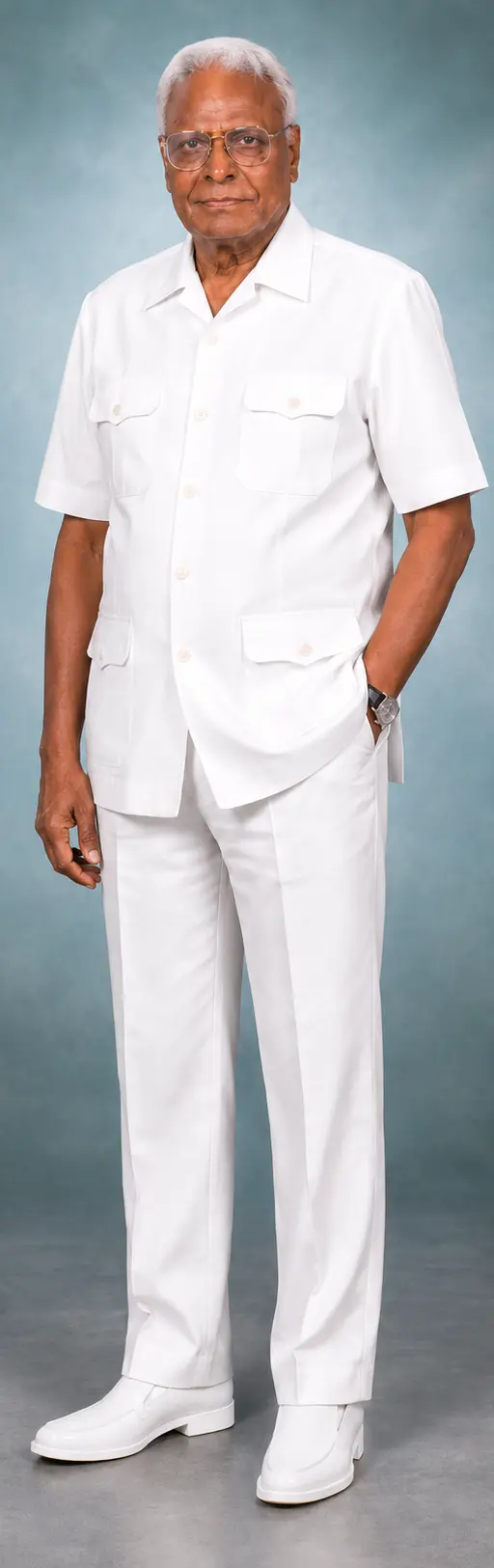
A life shaped by industrial India and dedicated to protecting the health, working ability and dignity of its people.
His perspective is rooted in more than five decades of occupational-health practice, study, teaching and service—across organised industry and workers beyond its formal reach.
Dr. Jayaraj grew up in the Kolar Gold Fields, where mining prosperity and worker poverty existed side by side. His father worked in the mines; the labour settlements, hazardous work and long shadow of silicosis were not abstract subjects.
As a young milk vendor he became known affectionately as “Good Morning Milky.” What began as family necessity became an early education in responsibility, human relationships and respect for every form of work.
A professional life in which personal experience, education and service continually shaped one another.
Born close to the dawn of India’s independence into a daily-wage family, he encountered the sharp contrast between industrial wealth and workers’ living conditions from childhood.
At four, he began delivering milk to support the household. The early rounds taught punctuality, communication and the dignity of labour.
He chose occupational medicine and spent nearly four decades with Neyveli Lignite Corporation India Limited, serving workers and learning across disciplines.
His professional development included study through AIIH&PH, the National Board of Examinations, the London School of Hygiene & Tropical Medicine and the University of Münster.
After superannuation, he continued teaching and opened an early-morning clinic designed around the working hours of people in the unorganised sector.
Five decades of occupational-health experience continue through advisory work, education, community service and an extensive practitioner reference on the Code and Rules.
Clinical medicine matters. So do industrial hygiene, safety, ergonomics, statistics, psychology, social conditions, labour relations and the organisation of work.
Interpret health in the context of function, exposure and work.
Share practice with empathy and respect rather than intimidation.
See worker health as a question of welfare, justice and national progress.
Design care around the realities of the person who depends on work.
Care before the working day begins
After retiring in 2007, Dr. Jayaraj opened a free occupational-health clinic from 6:00 to 9:00 a.m. for domestic workers, vendors, gig workers, construction workers, sanitation workers and others whose working day often made conventional care inaccessible.
The clinic paired timely primary care with practical guidance on workplace hygiene and safety. Its organising insight was simple: for a daily-wage worker, access at the right time can protect both health and livelihood.
“Retirement gave me time; service gave its meaning.”
Dr. Jayaraj’s book brings together the OSHWC Code and Central Rules with observations from industrial practice, occupational hygiene, clinical care, worker welfare and his own life.
Explore the bookThis narrative is adapted from Chapter 24, “My Journey Through Adversity—A Life Dedicated to Occupational Health,” in Dr. Jayaraj’s book. It presents his first-person recollections and professional perspective.